


The landscape of local search in 2026 has undergone a profound structural metamorphosis, transitioning from a reactive retrieval model to a proactive, AI-driven “answer engine” paradigm. For businesses operating at the city level, the objective has shifted from merely appearing in search results to becoming the definitive, verified entity within a specific geographic and categorical niche.+1
Because the modern buyer’s journey is “fractured” across platforms like Google Maps, Apple Business Connect, and AI assistants like ChatGPT, local search visibility is a cross-platform imperative. Here is exactly how to dominate local search in your city.
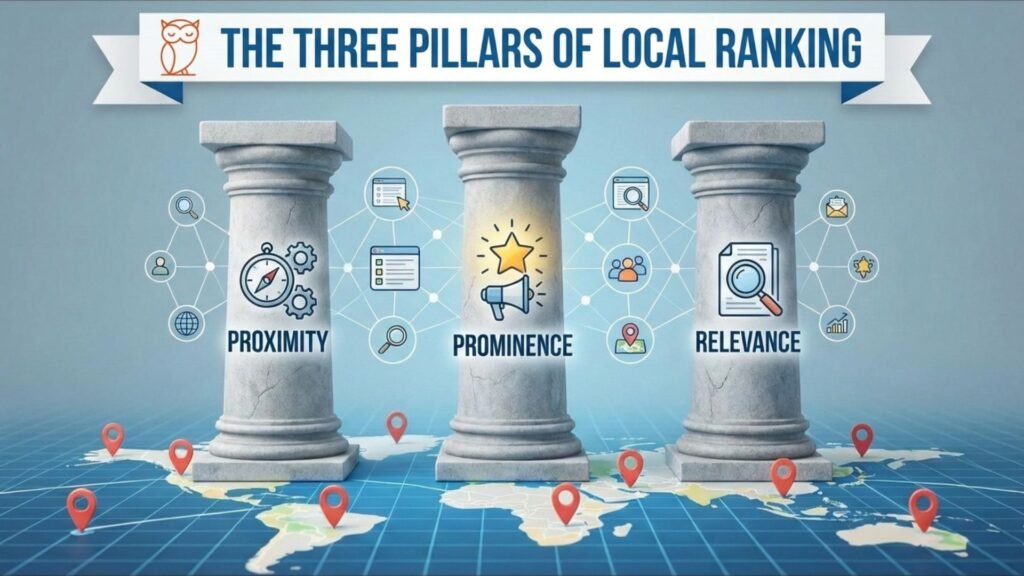
The Three Pillars of Local Ranking
The local search algorithm continues to rely on three core pillars to determine the hierarchy of local results.
- Proximity: This represents the physical distance between the searcher and the business location. Utilizing real-time GPS data and IP triangulation, Google creates hyper-local “ranking radii” that can shrink to 1 to 3 kilometers in dense urban environments or expand in rural areas. While you cannot fake proximity, you can influence it through service area business settings and hyper-local landing pages.+4
- Relevance: This measures the correlation between your listing and the user’s specific search intent. The algorithm uses advanced natural language processing to evaluate entity authority by analyzing business categories, website keywords, and review justifications.+3
- Prominence: This reflects your perceived digital authority and trustworthiness within the community. Prominence is influenced by review volume and velocity, local media links, and “AI visibility”—meaning AI agents cite your business as a recommended solution. Notably, reviews now account for 20% of Local Pack rankings.+4
Maximizing Your Google Business Profile (GBP)
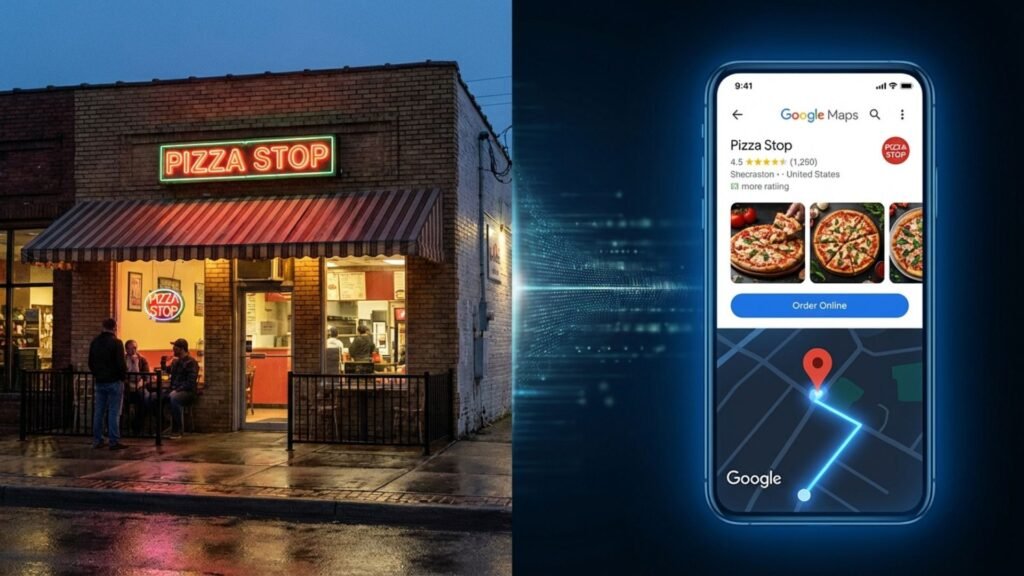
Your Google Business Profile has evolved into your primary digital storefront, often serving as the first and only point of contact before a transaction occurs. It must be treated as a dynamic engagement platform rather than a static listing.+1
- Ruthless Categorization: The primary category is the single most influential ranking factor for relevance. You must be “ruthlessly specific,” selecting “Pediatric Dentist” instead of just “Dentist” to capture niche traffic.+1
- Leverage Attributes: Highlighting attributes like “Women-led,” “Wheelchair accessible,” or “24/7 service” feeds AI Overviews and can increase discovery searches by an average of 34%.
- Feed Vision AI: Google’s Vision AI scans uploaded visual content to verify that it matches your claimed category and location. Uploading quality photos provides a massive trust signal that can generate up to 42% more direction requests and 35% more website clicks.+2
- The “Openness” Filter: The algorithm places unprecedented weight on real-time availability. The “Openness” signal acts as a dynamic filter; if your profile hours indicate you are closed, you will instantly disappear from high-intent “near me” queries.+1
Technical Local SEO & Content Architecture
A well-optimized GBP must be supported by a robust technical architecture on your primary website to prevent “pogo-sticking”—when users click your site and immediately bounce back to search, hurting your rankings.+1
- City-Specific Landing Pages: Creating dedicated landing pages for each target city (e.g., example.com/hisar-plumber/) prevents location confusion. Rolling out 10-15 local landing pages can increase conversions by 55%, while 40+ pages can drive up to 500% improvement. These pages must include unique local content, embedded maps, and consistent NAP (Name, Address, Phone) details.+3
- LocalBusiness Schema: Structured data is the primary mechanism for communicating with AI models. Implement granular subtypes (like AutoBodyShop or Plumber) and include your address, telephone, and opening hours in an AI-readable format.+1
Citations, Reviews, and Hyper-Local Links
Your local authority is validated by your mentions across the broader internet.
- Prevent NAP Chaos: Discrepancies in your Name, Address, and Phone number across directories like Justdial, IndiaMART, Apple Maps, or Yelp create “NAP chaos,” which damages search engine trust.+1
- Hyper-Local Link Building: Standard global link building is less effective than earning links from city-level news portals, neighborhood blogs, and local organizations. For example, in the Hisar market, earning citations from the Greater Hisar Chamber of Commerce or local news portals like Dainik Bhaskar Hisar builds powerful local prominence.+3
- Review Velocity: Customer reviews are the single most powerful trust signal. Reaching 10 verified reviews hits a critical algorithmic trust threshold. However, the strategy requires velocity: a steady drip of 2-3 reviews per week is far more effective than a sudden surge. Encourage customers to use specific semantic keywords (e.g., “excellent kitchen remodel”) so Google can create “Review Justifications” directly in search results.+4
Tracking Success with Validation Testing
Measuring success requires monitoring high-intent actions that lead to revenue: direction requests, clicks to call, and AI brand mentions.
To track real visibility, use 10×10 GeoGrid scans at 1 km spacing to map your true ranking radius. Implement a “Validation Testing” protocol: establish a baseline scan, make a single isolated change (like updating schema), wait 48 hours for the indexing window, and rescan to see if the map turns green.+1
FAQs
The local search algorithm relies on three core pillars: proximity, relevance, and prominence. Proximity is the physical distance between the searcher and the business, relevance measures how well the listing aligns with the user’s intent, and prominence reflects the business’s digital authority and trustworthiness.
The “Openness” signal uses real-time operating hours as a dynamic ranking filter. If a business is not updated and appears closed, it will be prioritized lower or instantly removed from immediate-intent “near me” searches, creating temporal volatility in rankings.
Google’s Vision AI actively scans uploaded photos and videos to verify that the visual evidence matches the claimed business category and location. Consistently uploading geo-tagged images acts as a massive trust signal and can generate up to 42% more requests for directions.
“NAP chaos” occurs when there are discrepancies in a business’s Name, Address, and Phone number across various online platforms and directories. This inconsistency damages trust with both users and search engines, confusing AI systems that rely on strict verification processes.
A business should aim to reach a threshold of at least 10 verified reviews to trigger a clear algorithmic ranking boost. Beyond that, the algorithm prioritizes “velocity”—meaning a steady influx of 2-3 new reviews per week is much more effective than getting a large surge of reviews all at once.